.crftcamp
An AWSM LABS Experience

Two Weekends. Build your Agentic team. Beyond theory.

Introducing CRFT Camp (“craft”) — an Agentic AI bootcamp for intrapreneurs and entrepreneurial teams. Over two weekends in New York, a curated cohort designs an Agentic team against a real business outcome, and leaves with three things: the system, the capability to build the next one, and the story that gets it adopted.

Dates
TBD
Two weekends · announced with applications
Location
New York City
Brooklyn · venue announced soon
Format
Two weekends
Plus a 7-day build window
Cohort
12–18 seats
Founding cohort · apply to attend
2.5Days of buildAcross two weekends
1Working Agentic teamDesigned and built by you
12–18ParticipantsFounding cohort
6Guaranteed pillarsOr we make it right
The thesis

Everyone teaches AI as a cost cutter. We teach AI as a growth engine.

AI = Artificial Intelligence

The tools.

Claude, Cursor, Vercel, RAG, agents — the stack we use every day at AWSM LABS, and the stack you'll learn to wield by Sunday.

AI = Augmented Innovation

The outcome.

New products, new revenue lines, new ventures. Not faster reports — different work entirely.

Every project starts from an outcome, not a tool — commercial work on the front office, or operational work on the back. The squad is how you get there. What you leave with is a working system with its steps written down and connected to the tools that do the job: the same shape CRFT builds for companies, at the scale you can ship in two weekends.

The methodology

Every session runs on IGNITES.

IGNITES is a proprietary seven-phase framework built by AWSM LABS — the same methodology we run on enterprise engagements. It redesigns innovation for the age of AI: you don't just learn how to prompt, you learn how to investigate, build, validate, and ship, with ROI alignment bookending the entire journey.

Every phase shows up across both weekends. Nothing is skipped. The compression is the point — you move fast because the framework keeps you honest about what matters.

IInvestigate

Map the problem space. Identify workflows, pain points, and opportunity areas worth solving with AI. Go wide before going deep.

Walk away withA ranked problem landscape. An initial hypothesis for what to build.

GGauge

Validate feasibility. Assess data readiness, technical constraints, and stakeholder appetite. Build the early ROI story — why this matters to the business or the market.

Walk away withA feasibility brief. A preliminary ROI narrative you can defend.

NNarrow

Converge. Ruthlessly scope the MVP. Choose your AI stack — agents, APIs, integrations. Set success metrics. Kill everything that doesn't serve the core.

Walk away withAn MVP spec with defined scope, tech stack, and build timeline.

IImplement

Build. Construct agents, products, and automations in rapid sprints. Ship to real users within days, not months — where AI moves from concept to working system.

Walk away withA working product with real functionality. Build documentation.

TTest

Validate with evidence. Test with real users, workflows, and data. Validate the business model, not just the technology — adoption, retention, actual value.

Walk away withUsage data, user feedback, and an evidence log for stakeholder reporting.

EElevate

Refine based on test evidence. Polish the product. Build the final ROI story — the bookend to Gauge. Craft the presentation with impact data.

Walk away withA refined product. A leadership-ready presentation backed by evidence.

SShare

Launch. Present at Demo Night to an invite-only audience of operators, founders, and investors. Tell the story of what you built and what's next.

Walk away withA live product. A 90-day growth roadmap. A Demo Night presentation.

How IGNITES maps to the two weekends

Weekend 1

Spec + build foundations

Investigate · Gauge · Narrow · Implement (start)

7-day build window

Focused implementation + testing

Implement · Test

Weekend 2

Refine, storytell, Demo Night

Implement · Test · Elevate · Share

Why IGNITES, not a syllabus? Most programs hand you a curriculum and hope you follow it. IGNITES is an operating system — it tells you what to do at each stage, what to produce, and when to move on. It's the same framework we run on enterprise engagements. You're getting the methodology, not a course outline.

The value architecture

The 6 Pillars, What Every Participant Leaves With

Six concrete deliverables. Every participant. Every cohort. Guaranteed.

01

Plan

A written roadmap for your squad's work. Specific, execution-ready.

02

Process

A repeatable design methodology for orchestrating Agentic systems.

03

Product

A redesigned system with AI at its core — real, working, yours — plus the squad that built it.

04

Playbook

Documented tool stack, prompt templates, architecture patterns.

05

Presentation

The story that gets it adopted, funded or bought — deck and talking points.

06

Peer Network

Slack community. Alumni circle. Real allies.

What you'll build

Design your AI System.

Eight system types — or bring your own. Each one is named for what it returns, not for what it is made of.

Commercial valueFront office — a number that has to move.
  • Lead generation & qualification

    Inbound scored on arrival and routed, sharpening its read of fit with every closed deal.

  • GTM & campaign engine

    Brief to launch without a queue — built, shipped and measured in one loop.

  • Post-sales growth

    Expansion and churn signal read daily, with the save and upsell plays fired off it.

  • Proposal & pitch system

    Scoped, priced and written from the deals you have already won.

Operational valueBack office — hours and judgment, back.
  • Chief of staff & admin system

    The standing agenda, the follow-ups and the status-chasing that eat a leader's week.

  • Internal knowledge bank

    Your documents, decisions and threads, answerable — with the source attached.

  • Report & analysis engine

    The weekly pack read, summarized and open to being argued with.

  • Content generation & eval engine

    One input, many outputs, each scored against your bar before anything ships.

Bring Your Own System: custom projects get a 10-minute scope sanity-check before acceptance. Two weekends supports one agent doing one task, or one agent orchestrating another — we'll tell you early if an idea is bigger than that.

The audience

Who the founding cohort is for.

Two seats at the table, split by the outcome you're chasing — not by your title.

Commercial · front office

Growth and revenue owners

You own a number that has to move: acquisition, conversion, retention. You have pressure from leadership, no internal build capacity, and you need a working system to defend a decision — not another vendor deck.

Operational · back office

Process and data owners

You own how the work actually runs: admin, data, internal process. You know exactly where the hours go, and you want a squad that takes the repeatable part off your team without waiting on a platform roadmap.

Every attendee is an entrepreneur — they just sit at different company stages. The founding cohort is deliberately tight so the room stays coherent; the wider set opens up from cohort 2.

Sound familiar?
  • CapabilityI want to actually understand Claude — not just paste prompts into it.
  • I want to stop being the bottleneck.
  • CapabilityI want to use Claude Code without a developer sitting beside me.
  • I've watched every tutorial. I still haven't shipped anything.
  • CredibilityI want to be the person in my company who knows how this works.
  • LeverageI need to do more with the team I already have.
  • I keep getting asked what our AI strategy is.
  • CredibilityI want to be the source of AI capability here, not the one forwarding articles.
  • SystemsI want a small agent team running real work, not another demo.
  • My team is using AI. Nobody can tell me whether it is working.
  • SystemsI want to think in systems — to design the loop, not the prompt.
  • We have run the pilots. I need something that stays running.
  • LeverageI want proof before I ask for budget.
  • I want to bring my team a method, not another subscription.
The agenda

Two weekends, a build week, and what happens in each.

You arrive with a problem and leave with an agent running against it, a scoped project and a squad that knows what you are building.

Friday · 4:00–8:30pm
  1. Orientation

    Context engineering and prompt iteration — the two skills every later session assumes.

  2. The Speed Build

    Your first agent, running, in 60 minutes. Before any theory, so the rest of the weekend has something concrete to argue with.

  3. Squad design brief intake

    The outcome you came to work on, written down and pressure-tested against what two weekends can actually ship.

  4. Founder's welcome dinner

    The cohort is 12–18 people and you will be working beside them for a fortnight. This is where that starts.

Saturday · 9:00am–8:00pm
  1. Tool deep-dive

    Claude, Cursor, Vercel, RAG, agents — the stack AWSM LABS runs on, and the one you will be wielding by Sunday week.

  2. Data synthesis

    What your system needs to read, where it lives, and what to do about the parts that are not machine-readable yet.

  3. The worked example

    One system, built by the whole room together, start to finish. You watch the decisions get made before you make your own.

  4. Project scoping

    Your brief cut down to what ships. Faculty sit with each squad for this one.

  5. Build Block 1

    First real build time on your own project, with faculty in the room.

  6. Group dinner and buddy pairing

    You are paired with one partner for the week ahead. Same pairing all week, so neither of you is explaining your project from scratch on a Thursday.

Session order is set. Exact start times inside each day land with the venue.

The faculty

The operators who run the engagements, not guest lecturers.

IGNITES came out of client work. The people who built it are the people in the room with you — designing, scoping and pair-building across both weekends.

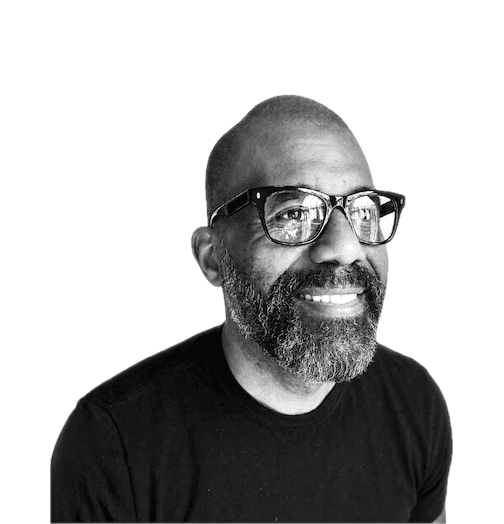
Fritz Desir

Fritz Desir

Managing Partner · Strategic Design

29+ years across digital experience, product, and strategy. Former North America Head of Strategic Design at BCG and experience design director at McKinsey & Company. Two-time founder, certified product owner, and former NYU adjunct instructor.

Evie Wick

Evie Wick

Human Systems Transformation Lead

25+ years turning technological possibility into organizational capability. Led strategy and change at IBM — the global Intelligent Utility Network methodology, then the enablement portfolios that trained consultants worldwide. Now works on human–AI readiness and inclusive systems design.

Peter March

Peter March

Experience & Process Design Lead

20+ years in interaction design across CPG, tech, and healthcare — including Bayer, Sanofi, and Novartis. Former Director of UX at FCB Health, Neon, and VML. Former UX instructor at Miami Ad School.

Pricing

One price. Early-bird credit for the founding cohort.

Final pricing lands when applications open. Here is the range it will land in.

$995 – $2,995

Indicative range · final price announced with applications

Founding-cohort applicants get an early-bird credit of $200–300 against whatever the final price is.

Get notified
  • All sessions, meals and materials across both weekends
  • The Speed Build, the worked example, and three coached build blocks
  • Group coaching during build blocks, plus Tuesday and Thursday office hours
  • The Storytelling Masterclass and a Demo Night slot
  • All six pillars delivered
  • Slack community and the alumni circle
The guarantee

Six pillars, or we make it right.

You leave with all six. If something is missing, we finish it — and if we can't, you get your money back.

6-Pillar Guarantee

Missing a pillar by Sunday? Tell us and we complete it after camp. If we can't, or you'd rather not, it's a full refund.

First-Day Guarantee

Not the right fit by end of Day 1? Tell us Friday — full refund, no conversation needed.

AWSM LABS Pays You Back

Engage CRFT within 90 days and your full ticket credits against the engagement.

How to get in

Tell us what you'd build.

Applications open shortly. Seven questions now means seven fewer later — and founding-cohort applicants hear first.

01Company size

So we can balance the room across stages.

02Your level

Where you sit, and who signs off on what you build.

03Your area

Which part of the business you work in.

04Commercial or operational

Front-office growth work, or back-office process work.

05Your stack

Which AI and build tools you have actually used.

06What you've built

From chat only, through automations, to a shipped product.

07Your goal, in a sentence

The one outcome you'd want to walk away with.

When applications open, this pre-fills your form and you get the early-bird credit. We review on a 48-hour rolling basis from there.

After Camp

You build one. CRFT builds the rest.

Camp gives you a system you built yourself, and the method to build the next one. CRFT is the same work at company scale: we embed with your team, read how the work actually runs, and build the operating layer around it — owned by you, not rented.

01

You leave Camp with a system

One working build, the IGNITES method, and the six pillars.

02

A Scan prices the next one

Five inputs, a published price, a report in 48 hours. Half the fee credits forward.

03

Your ticket comes off the bill

Engage CRFT within 90 days and the full Camp ticket credits against the build.

Early signup

Answer them now.

The seven questions from “How to get in”, one at a time. Founding-cohort applicants hear first, these answers pre-fill the real application when it opens, and the early-bird credit is held against whatever the final price lands at.

  • Founding-cohort applicants hear first — before this page changes.
  • Your answers pre-fill the application: seven questions now, seven fewer later.
  • The early-bird credit — $200–300 against the final price — held for the list.
07 questions

Ready when you are — seven questions, one at a time.

About a minute

Cohort 1 · Dates TBD

Two Weekends. Build your Agentic team. Beyond theory.

The founding cohort is 12–18 people in New York. Applications aren’t open yet — tell us what you’d want to build and we’ll come to you first, with the early-bird credit.